
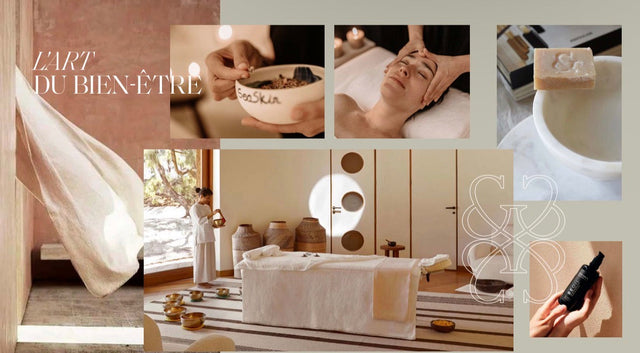
When well-being becomes infrastructure
The new standard of wellness in hospitality
How to turn well-being into infrastructure, experience, and real profitability
For years, wellness in hotels was an added service. A basement spa, a massage menu, a line of decent amenities, and a generic promise of relaxation. It worked as long as guests sought to disconnect for a few hours. But that model no longer caters to today's traveler or the new luxury. Today, fatigue is chronic, stress is biological, and rest cannot be resolved with a cream or an hour in a treatment room.
The contemporary guest—especially in the premium segment—doesn't want entertainment; they want real physiological regulation. They want to sleep better, recover faster from jet lag, reduce inflammation, maintain mental energy, and feel balanced even in highly demanding contexts. In other words, they are no longer looking for a spa. They are looking for a system that repairs their biology.
That's where traditional wellness falls short.
And that's where the SeaSkin Life approach is born.
SeaSkin Life is not conceived as a cosmetic brand or a treatment provider, but as a comprehensive wellness infrastructure designed to integrate organically into hotels, spas, residences, and daily life. The goal is not to offer isolated experiences, but to build environments capable of sustaining internal states of calm, coherence, and recovery over time. It's not about "making one feel good" for an hour, but about training the nervous system so that well-being is maintained even after leaving the space.
This paradigm shift completely transforms the way hospitality is understood.
When wellness becomes infrastructure, it is no longer limited to the treatment room. It extends to architecture, light, scent, touch, the rhythm of protocols, materials, air quality, products that touch the skin, and continuity at home. The guest does not enter a spa: they enter a regulatory ecosystem.
In this context, the treatment is no longer the center. It is just one piece within a larger system. The experience begins before —in the room, in the shower, in the textiles, in the acoustic silence— and continues afterward —in retail, in the home routine, in the repetition of the ritual—. Well-being ceases to be punctual and becomes biological continuity.
This approach has profound consequences not only at a sensory level but also operationally and economically.
Because when wellness is well designed, it is not a cost: it is a strategic lever for profitability.
Spaces that integrate coherent protocols for physical and emotional regulation increase length of stay, elevate perceived value, improve loyalty, and multiply retail conversion. The guest does not buy a product on impulse; they buy because they want to prolong the state they have experienced. Experience becomes desire, and desire becomes recurrence. In this way, well-being ceases to be decorative and becomes a real business driver.
Furthermore, this model responds to a growing demand for evidence and credibility. Current luxury is no longer based solely on aesthetics or narrative, but on measurable results. That's why the new wellness relies on physiology: cortisol, deep sleep, heart rate variability, cellular recovery, systemic inflammation. Concepts that once belonged to the clinical field are beginning to be part of the language of advanced hospitality. The guest doesn't want promises; they want to feel that their body is truly changing.
SeaSkin Life is precisely at that intersection of science, sensoriality, and design. It combines botanical and marine cosmetics with conscious touch protocols, aromacology, chronobiology, thermal contrast, and sensory architecture to create experiences that act on the autonomic nervous system. It's not just skincare; it's neurophysiological regulation applied to the environment.
This approach redefines the role of the hotel.
The hotel ceases to be a place to sleep and becomes a space to recover. The room ceases to be accommodation and transforms into a small sanctuary. The spa ceases to be an optional service and becomes the silent heart of the project. And the brand that supports all this is no longer an external provider, but a strategic partner in the guest's well-being.
That is the difference between adding products and designing a system.
In a market saturated with interchangeable cosmetic brands, hotels that opt for a comprehensive model do not compete on price or trend. They compete on something much more valuable: the ability to offer sustained internal states. And when a guest associates a place with real rest, mental clarity, and physical balance, loyalty no longer depends on promotions. It becomes bodily memory.
That's why the future of wellness is not about more treatments or longer menus. It's about the coherence of the method, the total integration of the environment, and the ability to transform experience into infrastructure.
SeaSkin Life was born precisely for that purpose.
Not to sell cosmetics.
Not to decorate spas.
But to design wellness systems that accompany real life.
Because true luxury is no longer about owning more.
It's about feeling better, for longer, anywhere in the world.
And that is the new standard.

0 Comments
There are no comments for this article. Be the first one to leave a message!